A good city day with a dog has a modest plan and enough room to change it. The best route is rarely the one with the most stops. It is the one that gives your dog chances to move, sniff, drink, rest, and leave when the outing stops being enjoyable.
Start with the dog you have today
Think about your dog’s usual walking distance, comfort around strangers, response to noise, and ability to settle while you sit. A dog who loves a quiet morning park may find a crowded street market exhausting. Age, mobility, temperament, and the weather all change the right answer. Pick an outing your dog can enjoy today rather than a route that looks impressive on a map.
If your dog is new to busy sidewalks, begin with a short loop near home. One easy destination and a familiar return route are enough. You can build longer outings gradually. For a dog who already enjoys urban walks, choose one main stop and one optional stop, with a quiet break between them.
Build the route around pauses
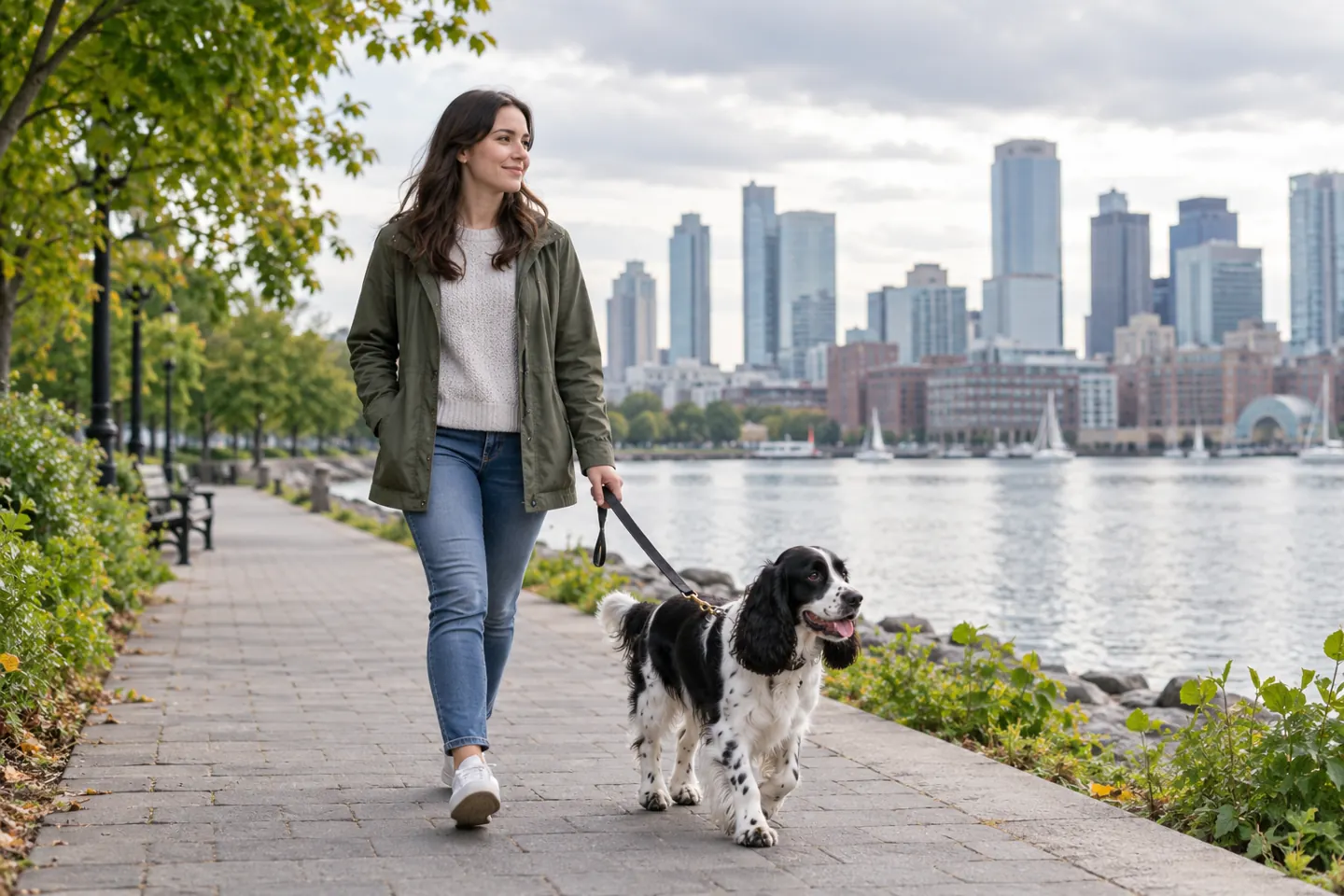
Choose a starting point with a comfortable place to walk, then identify a shaded or sheltered spot where you can pause. A park edge, wide promenade, or calm side street may work better than a commercial strip. Look for a place to refill water, but carry your own in case the fountain is closed. Check whether your chosen park has specific leash or access rules on its official website.
Estimate the walking time from the dog’s perspective. A mile of stop-and-go sidewalk can take longer than a mile on a quiet path. Add time for sniffing, crossings, and rest. If you use transit, check the operator’s current animal and carrier rules before leaving; they differ by system. For a driving trip, the AVMA guidance on pets in vehicles is a useful safety reference.
A simple half-day outline
- Begin with a relaxed walk before heading to the busier destination.
- Visit one dog-permitted outdoor location during its quieter hours.
- Take a water break away from traffic and footfall.
- Decide whether your dog still seems comfortable before adding a cafe or second stop.
- Return by the route with the easiest exit, even if it is less scenic.
This sequence is deliberately flexible. If the first stop is enough, head home. A successful outing can be brief.
Check permissions, not just recommendations
An online list calling a location “dog-friendly” is a starting point, not permission. Rules may distinguish patios from indoor dining, leashed paths from fenced dog areas, or ordinary days from ticketed events. Contact a business or consult its current policy when access matters. If the destination is an event, confirm that pets are admitted before arranging transport, parking, or tickets. Service-animal rules are separate from ordinary pet access.
Think through the entrance as well as the destination. A permitted park next to an event barricade might become awkward on a concert day. An appealing outdoor table can become crowded at brunch. The route to a dog-friendly place is part of the experience.
Pack for the actual plan
Water and a bowl, waste bags, a secure lead, and a few familiar rewards cover most short outings. A longer trip may call for a mat, a small towel, and the food your dog normally eats. Our dog day-out packing guide separates essentials from optional extras. Avoid a heavy bag of just-in-case objects that makes walking difficult.
Check the weather close to departure. Heat reflects from pavement, and a dog walking near the ground experiences conditions differently from a person. The ASPCA’s hot-weather guidance recommends fresh water, shade, and caution around hot asphalt. On a hot day, switch to an early walk or an indoor rest day.
Read your dog as the day unfolds
A comfortable dog can usually take in the surroundings, respond to you, and settle between bursts of activity. Persistent pulling toward home, refusal to move, repeated attempts to hide, or difficulty settling may tell you the environment is too much. Move to a quieter place and shorten the plan. If your dog shows signs of illness or distress, contact a veterinarian.
Do not feel obliged to use every stop on a saved itinerary. The freedom to go home is one of the most useful things you can plan. Give your dog downtime after a stimulating day; a quiet evening often fits better than another social outing.
An outing worth repeating
Note what worked: time of day, amount of walking, kind of pause, and how your dog behaved afterward. A repeatable two-stop route can become more valuable than a long list of untested places. Next time you can vary one element while keeping the rest familiar. That gives both you and your dog room to discover the city at a comfortable pace.
Decide how far to travel from home
A destination fifteen minutes away can be a better first choice than a famous dog-friendly spot across town. A shorter journey leaves more time for walking and makes an early return easy. If your dog is learning to ride transit, separate that practice from the first visit to a noisy new location. Two unfamiliar experiences at once are harder to read.
Sketch the route in three parts: travel to the neighborhood, the walking loop, and the trip home. For each part, identify a simpler alternative. A side street may replace a crowded shopping strip; a familiar bus stop may replace a transfer. This is useful even if you never need the backup.
Where a rest stop actually works
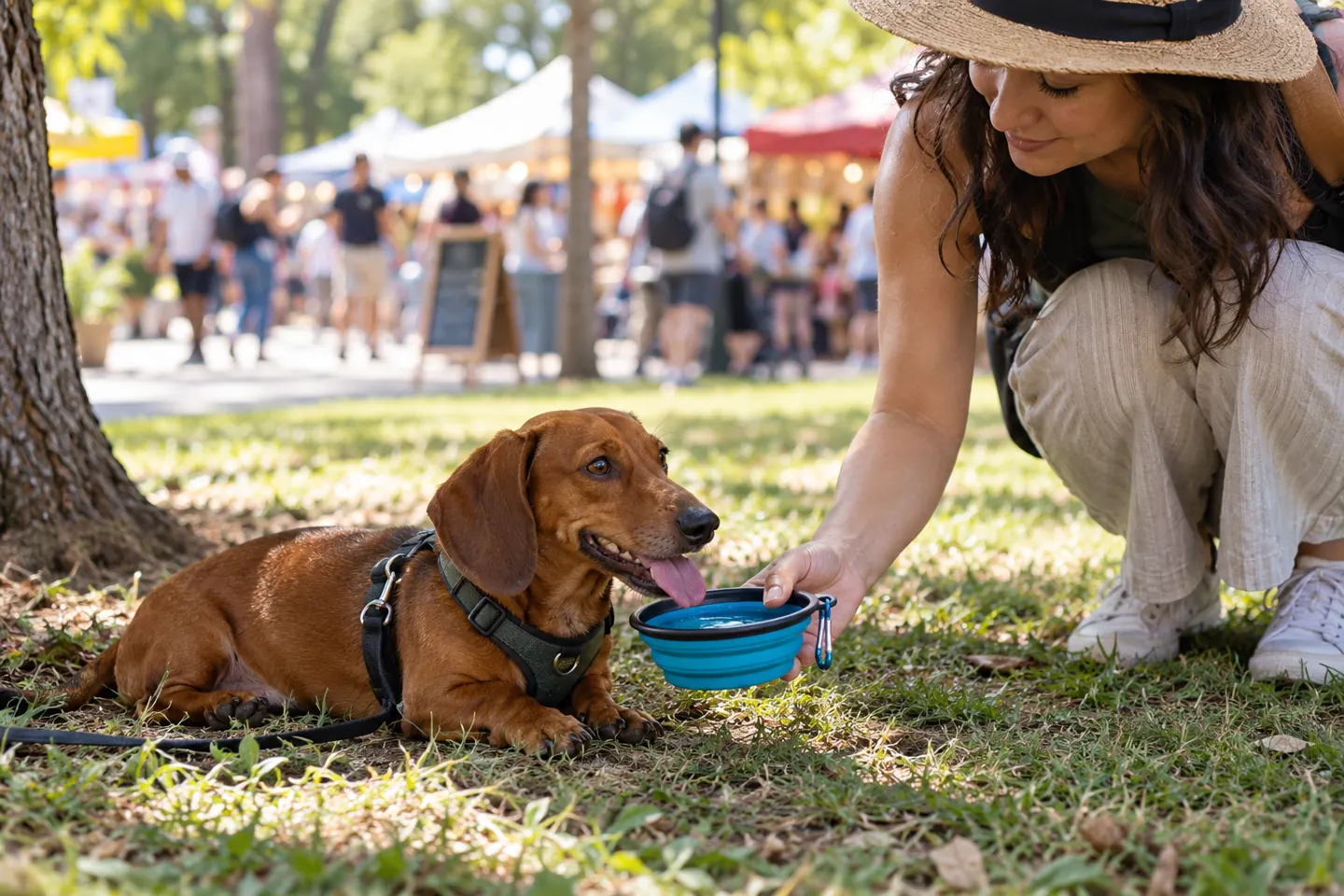
The most attractive bench is not always a useful resting place. Look for shade, room to keep the lead out of the path, and a place where your dog can settle without being surrounded by people. Offer water before your dog appears tired. If the dog is still alert but wants to watch the world, a few quiet minutes may be enough.
At a cafe, check the patio policy first and consider the timing. A line of brunch customers and several dogs squeezed between tables may undo the calm you built on the walk. A takeaway drink enjoyed on a quiet bench can be more satisfying for both of you.
Sample routes for different days
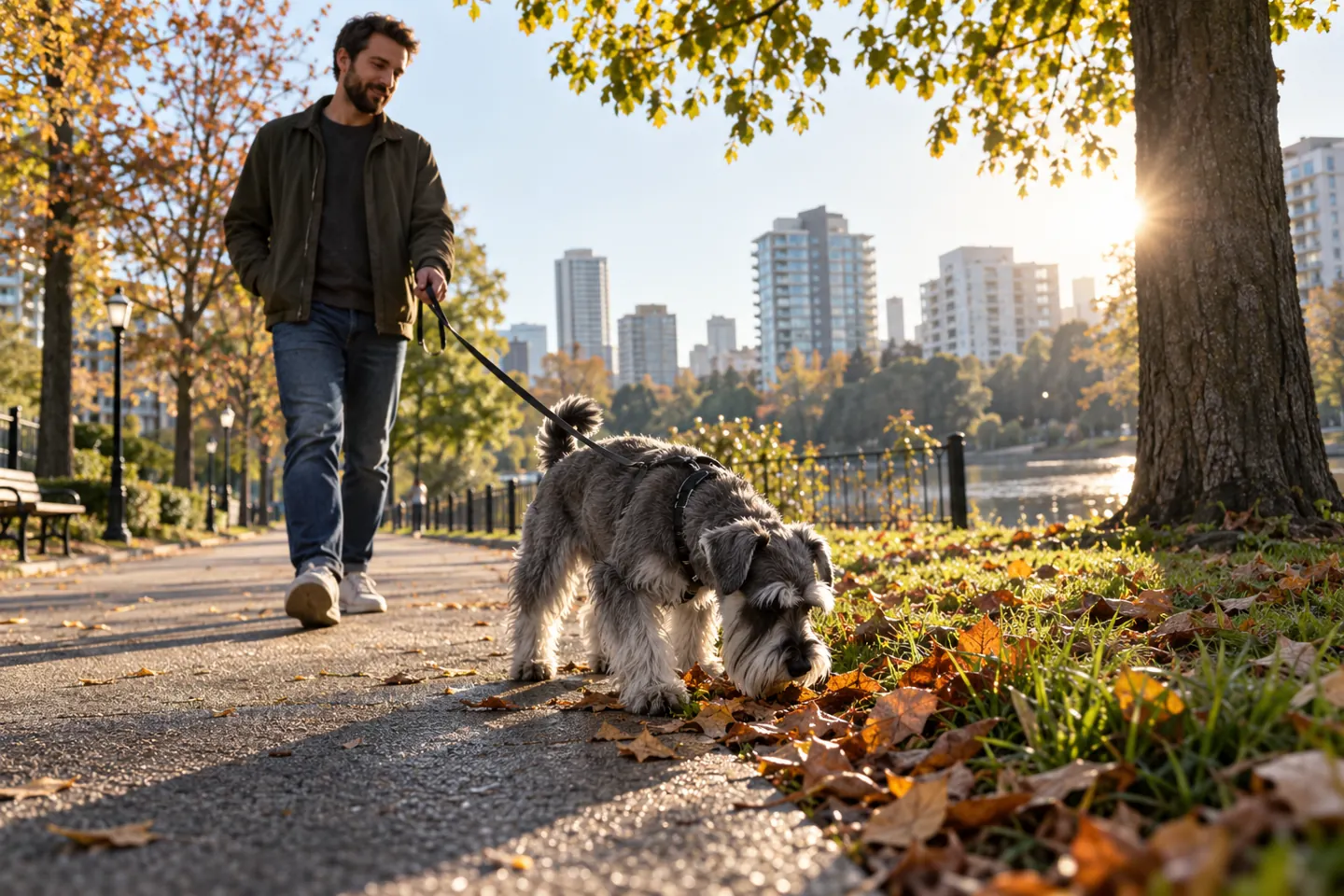
On a mild weekday, you might leave home after the commuter rush, walk a residential route to a park edge, rest for ten minutes, and return by a different quiet street. On a weekend, choose an outdoor market early, spend a short time at the perimeter, then walk away before the busiest hour. On a rainy day, make the destination a covered block close to home and leave the longer outing for another time.
These are models, not fixed schedules. If the dog reaches the park and wants to turn back, the outing has still done its job. A flexible plan helps you notice that moment instead of trying to complete the map.
After the outing
Offer water and a chance to rest at home. Check paws for obvious debris after a rough route and dry damp gear before storing it. Think back to the first point where your dog seemed excited or uneasy. That memory tells you more than the total number of steps. Use it to make the next outing a little easier.
A quick decision at the door
Before you leave, look at the weather once more and ask whether your dog seems ready for the plan. A route that looked perfect last night can become unsuitable after a hot morning or poor sleep. Bring the basics, tell a companion the rough plan if appropriate, and set off without treating every stop as required.
Once you return, note the easiest part of the day. Perhaps it was the quiet stretch between the park and home, rather than the cafe you had planned as the highlight. Build the next city day around that observation. The value of a flexible route is that it teaches you what your dog enjoys, one manageable outing at a time.
Confirm the current rules of each destination and shape the plan around your own dog’s comfort. For a sudden health concern, contact a qualified veterinarian.