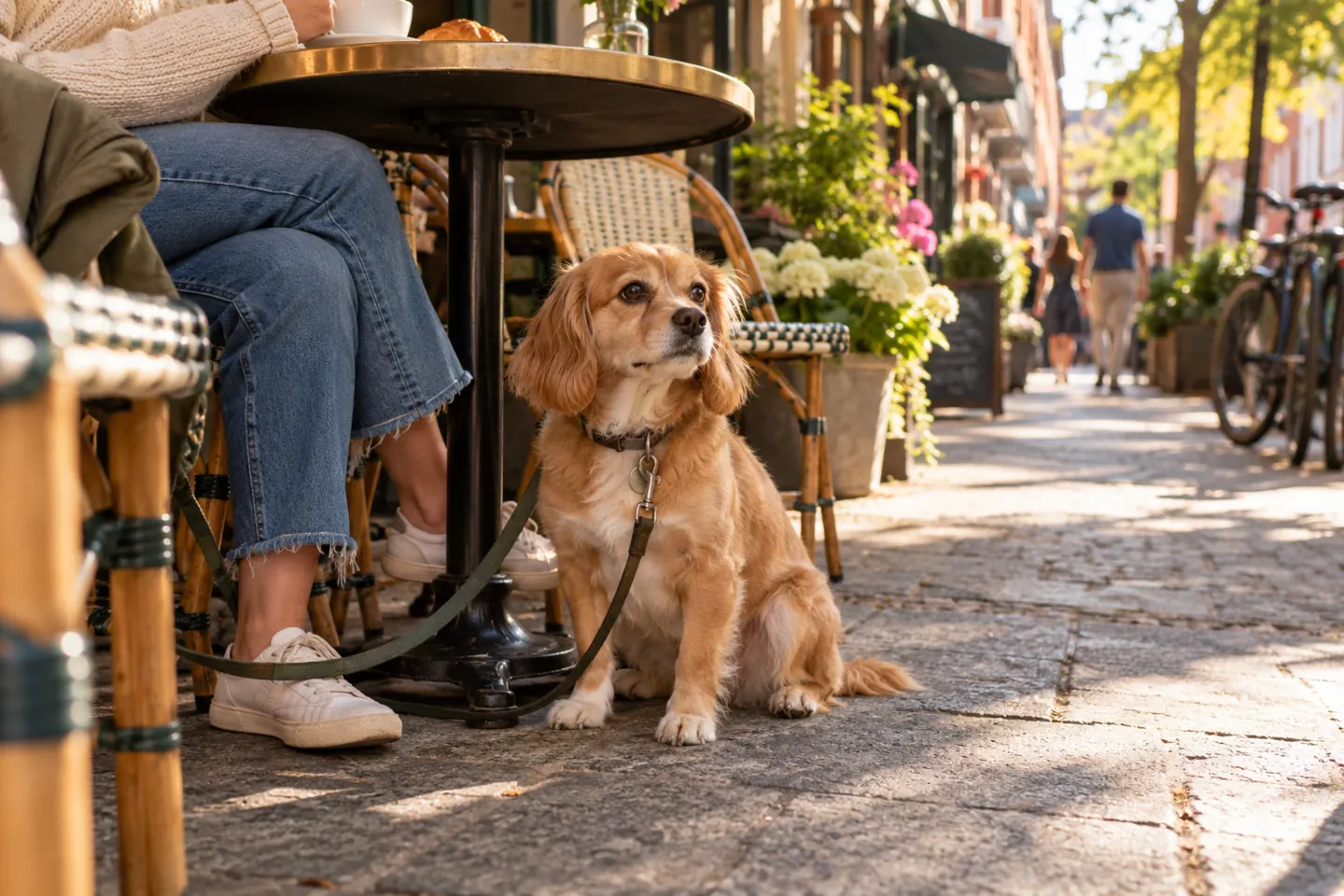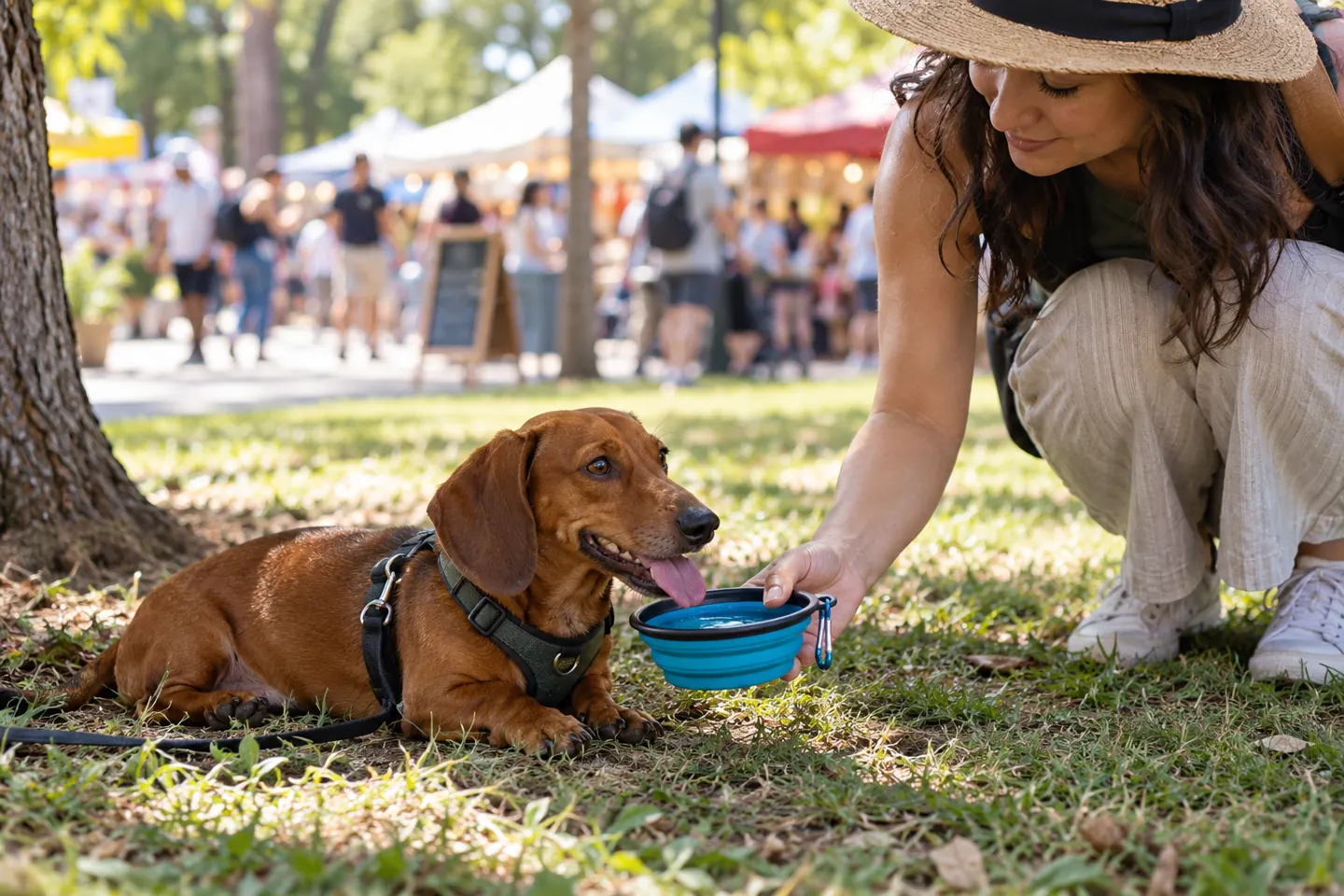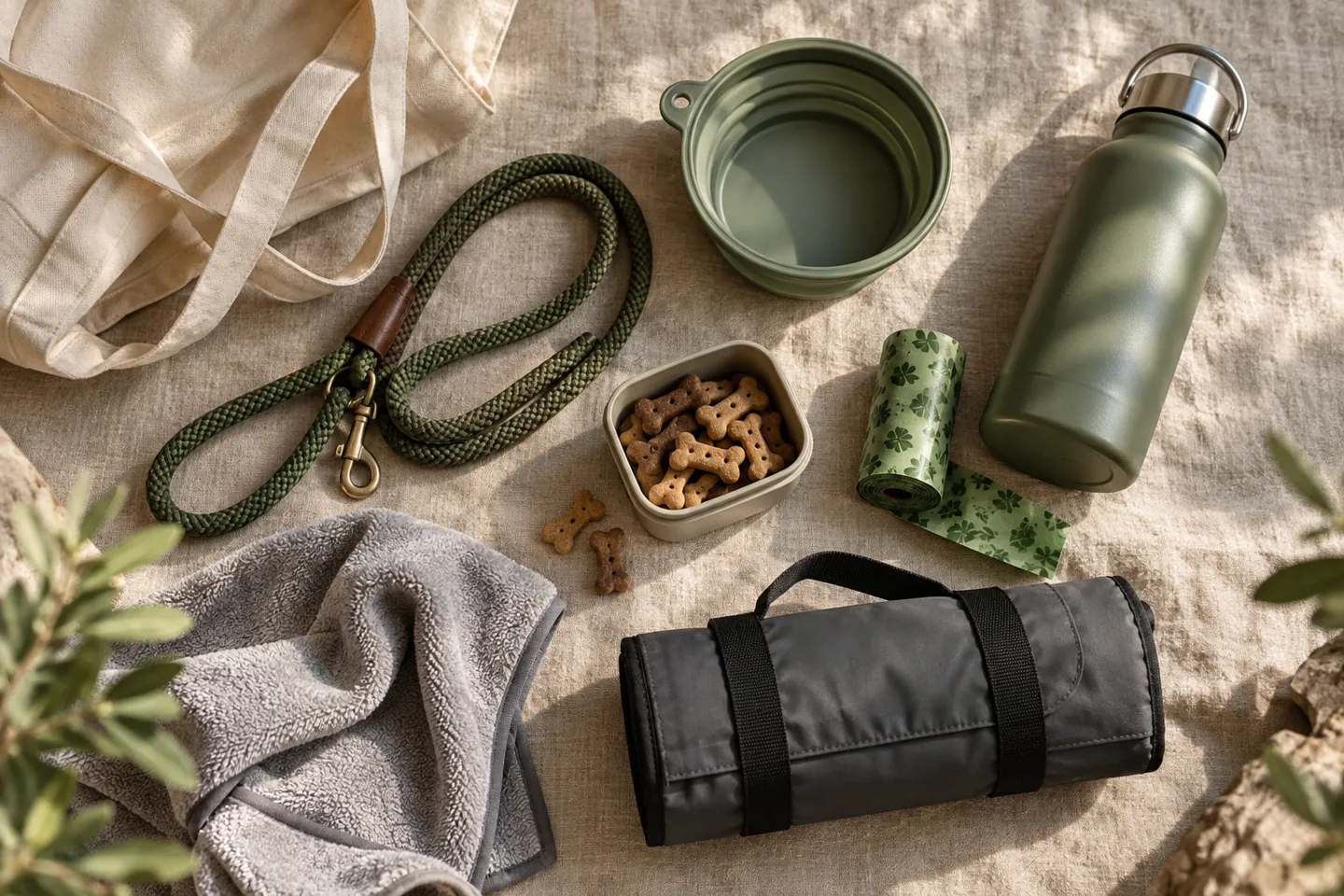
The right bag makes an outing easier without weighing you down. Begin with what the dog needs every time, then add items for weather, trip length, and the place you are visiting. Lay everything out before packing so you can leave behind duplicates and things you will not use.
The everyday core
- Water and a portable bowl or another reliable way to offer a drink.
- Waste bags, with more than you expect to need.
- A secure leash and suitable walking gear.
- Identification with current contact details.
- A small amount of familiar food or rewards when the schedule calls for it.
Keep water near the top of the bag rather than buried beneath other items. A spare waste bag can hold a muddy towel or damp gear until you get home. If your dog takes prescribed medication during the outing, follow the plan given by your veterinarian and keep it accessible.
Add items for a longer pause
A compact mat can give your dog a familiar resting place beside an outdoor table or at the edge of a park. A small towel helps with rain, muddy paws, and accidental spills. If your outing crosses a meal time, pack the food your dog normally eats and a way to serve it. Choose containers that close securely.
Bring a copy or accessible photo of any records actually required by the destination or transport provider. You do not need to carry every document for a neighborhood walk. Check policies in advance instead of guessing at the entrance.
Match the bag to the destination
A day in a park and a ticketed outdoor event may call for different bags. A venue can limit dimensions, compartments, or materials. Before packing for a gated event, read its official bag rules. A reference on event entry bag requirements can help you think through the issue, while the venue’s own current policy determines what is permitted. Confirm separately whether pets are admitted; bag permission does not imply dog permission.
If you are driving, keep the dog’s supplies reachable after parking, but secure loose items during travel. The AVMA’s vehicle safety guidance provides a useful starting point for travel planning. Never leave your dog in a parked vehicle while you run an errand.
Adjust for weather
In warm conditions, carry enough water for the dog and opportunities to refill, then choose shady breaks. Do not treat packed gear as a fix for an outing that is too hot. The ASPCA advises caution around heat and hot asphalt. Move a walk to a cooler time or stay home if conditions are unsuitable.
For rain, add a lightweight towel and a dry bag or pouch for damp belongings. In cooler weather, think about your own ability to wait comfortably outdoors: if you are cold and wet while holding a lead, the plan may need shortening. Gear supports good decisions; it does not replace them.
Keep the load manageable
Pack a small daily pouch with the essentials and a separate add-on pouch for longer outings. Refill both after you get home. Put the waste bags and lead in the same place each time. A familiar routine lowers the chance of discovering an empty roll several blocks away.
The bag should leave your hands free to manage the lead and doors. If it pulls awkwardly on your shoulder, trim it. Extra toys, several bowls, and duplicate containers are often unnecessary. A practical kit is one you can carry comfortably for the entire planned route.
A two-minute door check
Before leaving, ask: Is the destination open to dogs? Is there a way to offer water? Have I checked the weather? Do I know how we will return? Is the dog comfortable enough for this trip today? These questions can be answered faster than packing another object.
For a route with several stops, see our dog-friendly city day guide. Pack to serve the plan, then leave room in the plan to change. Your dog will remember the comfortable outing more than the contents of the bag.
Different trips, different packing choices
For a two-hour neighborhood visit, the everyday core may fit in a pocket and a small bottle. For a half-day park trip, add a mat, towel, and food if it overlaps the usual meal time. For a ticketed event, check entry rules first and then choose a compliant bag. For a train trip, prioritize what you can reach while managing a carrier and your own luggage.
Packing for the longest possible scenario every time creates its own problem: the bag becomes heavy and the essentials harder to find. Build a small kit that covers the most likely needs and revise it for each route.
Organize for quick access
Put waste bags in an outer pocket, water where it cannot leak onto food, and a towel in a separate pouch if rain is forecast. Use a small sealed container for treats instead of an open bag. Keep identification on the dog even if you also carry a copy of contact details.
Before you leave, check the bowl folds properly and the bottle is full. Gear that only works at home in an organized kitchen can disappoint on a windy curb. Try a new bowl or carrier on a short practice trip.
What to leave behind
Avoid carrying several unfamiliar treats, fragile decorations, a full collection of toys, or tools you do not know how to use. If you need medication, bring it as directed; otherwise do not pack medical supplies as a substitute for a veterinarian’s care. Keep the load low enough that you can open a gate, hold a lead, and help your dog without juggling objects.
For hot or crowded conditions, no amount of extra equipment makes an unsuitable destination suitable. Change the time, shorten the trip, or stay home.
Reset the bag afterward
Refill waste bags, dry the towel and mat, wash the bowl, and replace anything that was used. A quick reset after the outing is easier than trying to remember what ran out next weekend. Store the core kit near the lead so that a good weather window does not become a long packing session.
A kit for someone else walking the dog
If a trusted friend or sitter will handle part of the outing, write down the dog’s routine, relevant contact numbers, food instructions, and any known triggers. Show them how the walking gear fits and where the waste bags are. The transfer of information can matter more than adding equipment.
Keep health instructions specific to what your veterinarian has advised. When the other person understands the dog’s ordinary habits, they are better placed to notice a change and decide when to call you or seek professional help.
A five-minute practice run
Before a major trip, pack the bag and walk around the block with it. Can you reach the water quickly? Does the shoulder strap stay comfortable while you hold the lead? Does the mat actually fit? Testing the kit close to home reveals simple problems while they are easy to fix. If you use a carrier, practice opening and closing it calmly. The goal is not a perfect collection of products; it is a small set of items you know how to use when the day gets busy.
Confirm the current rules of each destination and shape the plan around your own dog’s comfort. For a sudden health concern, contact a qualified veterinarian.