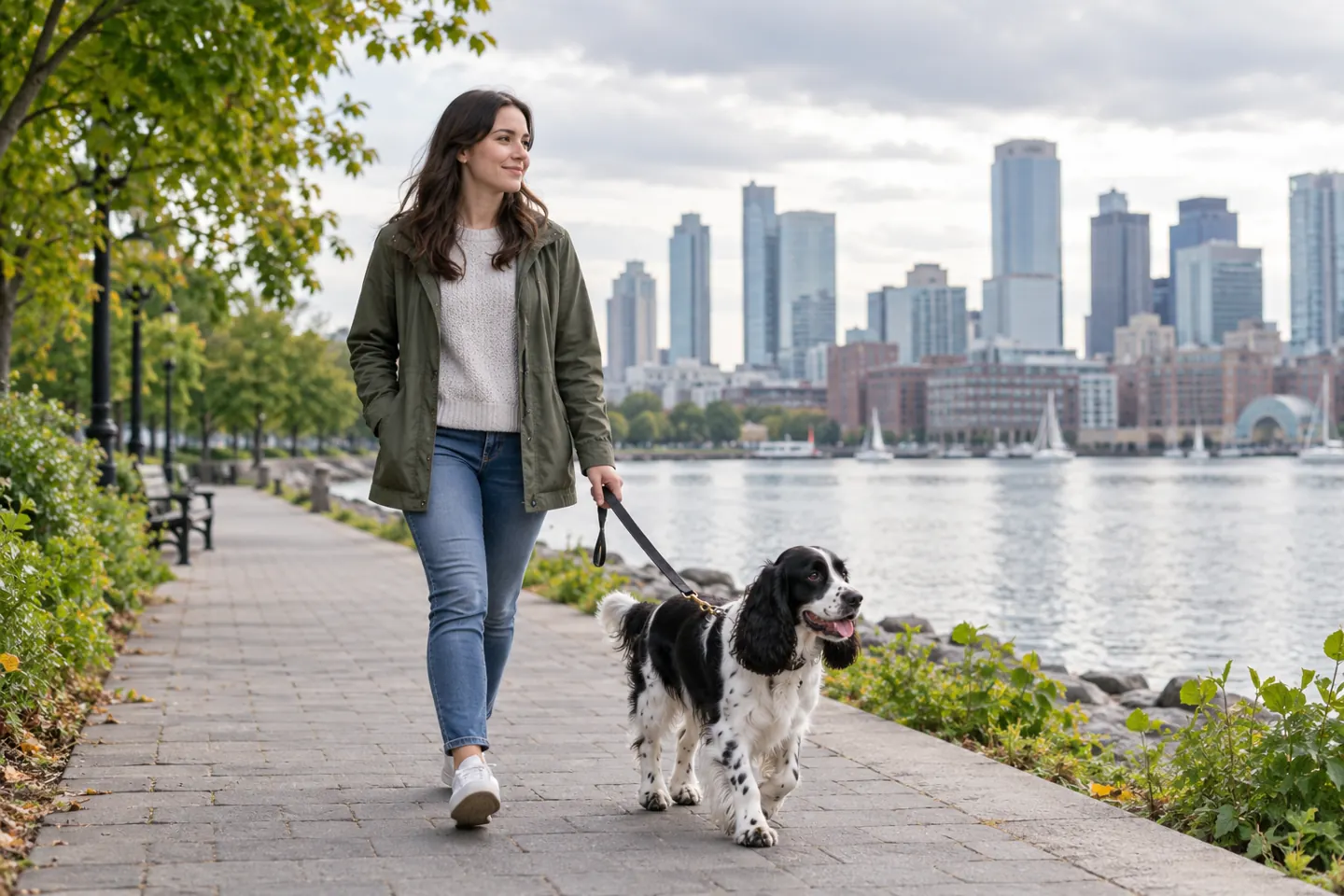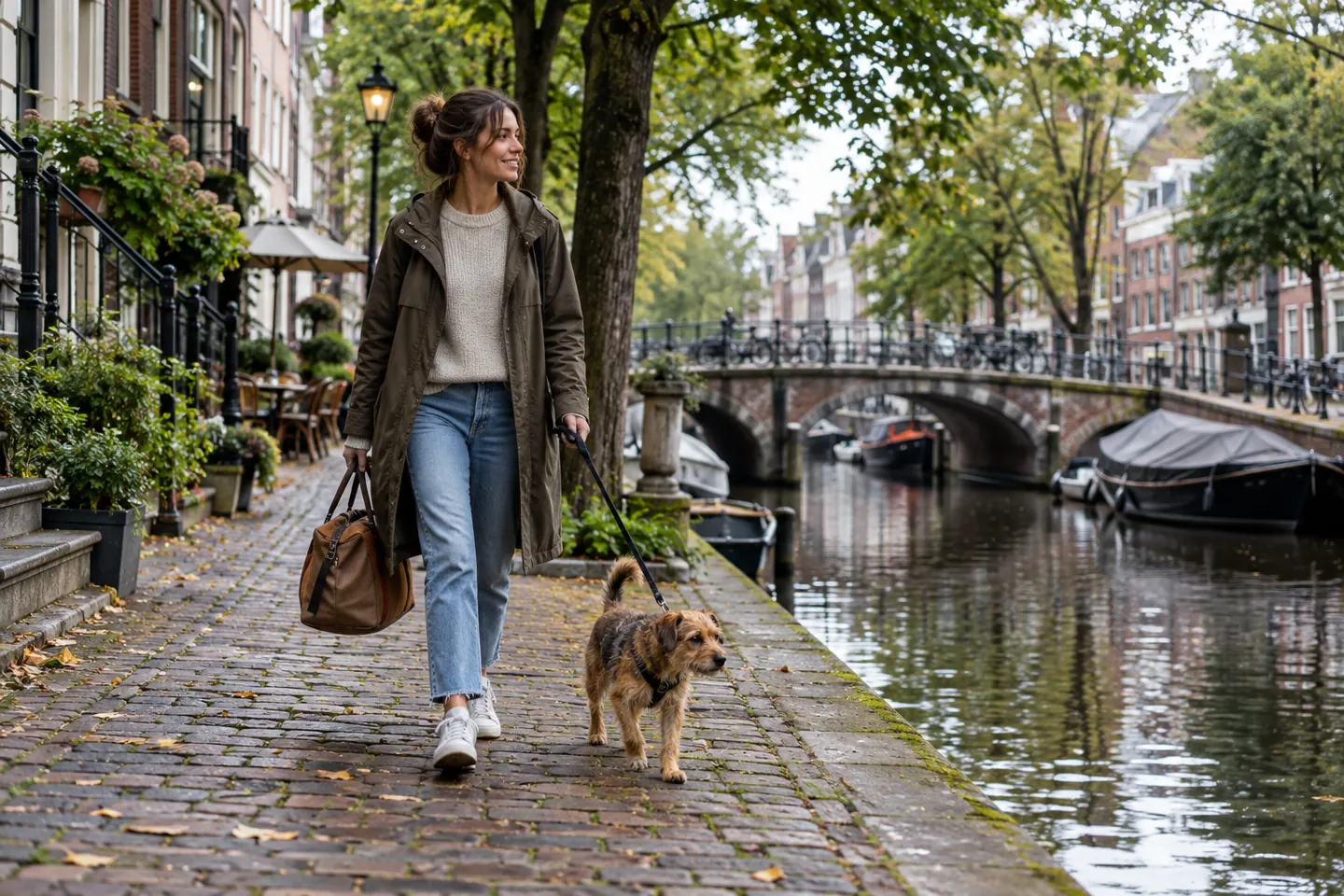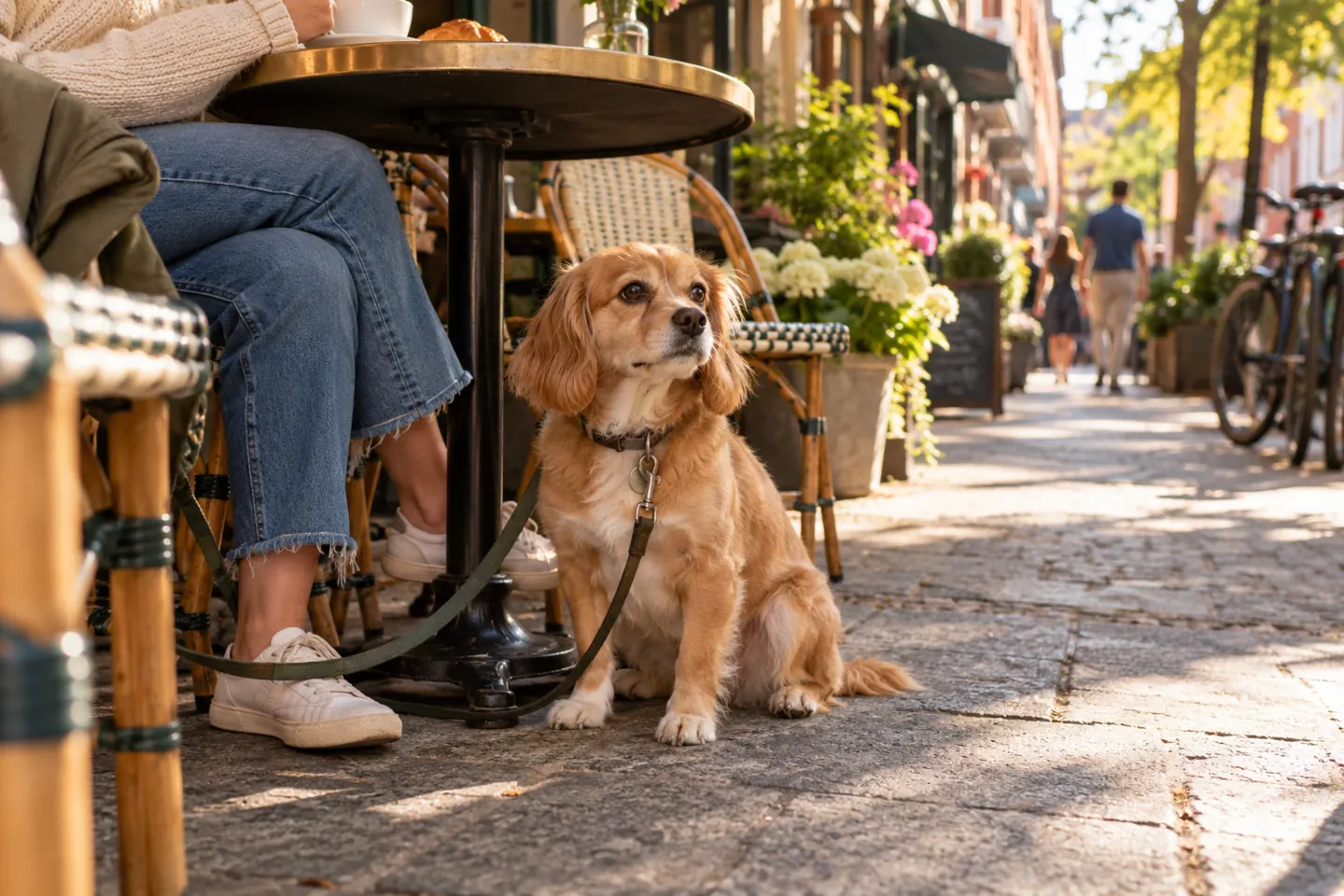
Good city dog etiquette is mostly about noticing the space around you. A dog can be friendly and still block a narrow sidewalk, startle someone at a cafe, or overwhelm another dog at a park gate. A few predictable habits make shared places more comfortable for everyone.
Sidewalks: leave a clear path
Keep your dog close when foot traffic narrows. Watch the lead across doorways, bicycle lanes, and cafe approaches so it does not become a trip line. Step aside when a stroller, mobility device, or large group needs room. At intersections, pause before the curb and cross together. Avoid letting your dog investigate a stranger’s bags or food without an invitation.
Not everyone wants to meet a dog, and that preference needs no explanation. If someone steps away, give them space. Likewise, you may decline a greeting for your dog. A brief “We’re going to keep walking” is enough.
Parks: read the actual rules
Leash requirements, designated dog areas, opening hours, and seasonal closures vary by park. Check signs and the official park department’s current guidance. Keep dogs out of restricted gardens, sports fields, or play spaces. Pick up waste promptly and carry it to a suitable bin; leaving a bag beside the path for later does not solve the problem.
At a dog area, pause before the gate. Look at the activity inside and decide whether the mix suits your dog. Move away if rough play, crowding, or persistent chasing makes your dog uncomfortable. A fenced area is an option, not a required part of responsible dog ownership.
Cafes: permission and placement
Ask whether the patio allows pet dogs before sitting. Choose a position where your dog can rest without blocking servers or other guests. Keep food on the table and the lead managed. If your dog barks repeatedly, jumps toward passing plates, or cannot settle, finish the visit or take a break elsewhere. The AKC’s restaurant readiness guide offers helpful questions to consider before a longer meal.
Rules for indoor spaces differ. Do not interpret a service-animal policy as general pet access. When in doubt, ask a staff member rather than relying on an old review or photo.
Greetings between dogs are optional
Two dogs passing politely without meeting is a success. On-leash greetings in a confined space can be stressful. Ask the other handler before approaching, watch both dogs, and move on if either seems reluctant. Do not let your dog rush a smaller dog, a resting dog, or a dog working with its handler.
Give more space near park gates and busy corners, where people have fewer ways to move. If your dog needs distance, choose a wider path or wait for the other dog to pass. This is practical route management, not a statement about your dog’s character.
Crowded public places need extra care
At a street fair, festival, or outdoor performance, confirm whether pet dogs are permitted by the event organizer. Protect the dog from discarded food, tight queues, and loud areas. Our outdoor event guide explains how to plan a quieter arrival and an easy departure. A dog who does well on a quiet patio may still dislike a dense festival crowd.
Keep water available and watch the weather. The ASPCA’s hot-weather advice highlights the importance of water, shade, and avoiding hot pavement. If your dog seems unwell, contact a veterinarian; etiquette takes second place to getting them help.
Small courtesy, big effect
- Ask before allowing a greeting with a person or dog.
- Clean up promptly and take waste to an appropriate bin.
- Keep doors, ramps, and walkways open for others.
- Follow posted rules even when the area looks empty.
- Leave if the setting stops working for your dog.
The aim is not flawless behavior at every moment. It is a habit of checking your dog, noticing other people, and making adjustments early. Those habits make a city more welcoming to dogs and the people who live alongside them.
Public transport and building entrances
If your dog is allowed on local transit, follow the operator’s current leash or carrier rules. Keep the entrance and platform clear, allow people to board first where space is tight, and consider a quieter service if your dog finds crowds difficult. Never assume a friend’s experience on another transit system applies to yours.
In apartment buildings, keep control of the lead while waiting for lifts and doors. Another dog may emerge suddenly from a lift. Leave a little distance so both handlers have room to move. Wipe muddy paws before entering shared interiors where practical.
When your dog makes a mistake
Dogs bark, pull, and have awkward moments. Respond by creating space and addressing the immediate problem. Apologize briefly if you blocked someone or caused a mess, clean it up, and move to a calmer area. You do not need to insist the dog stay in a setting where they cannot settle.
If the same issue happens often, change the timing or environment and seek skilled help if needed. Repeating a difficult encounter in the hope it will resolve itself can make shared spaces harder for your dog and others.
Distinguish access from suitability
A business may permit pets, but an individual dog may still be uncomfortable there. A dog may be allowed on a patio but struggle with chairs scraping and people stepping around the table. Before settling in, observe for a minute. If there is no safe place for the dog to lie without obstructing service, choose another stop.
The same is true of an off-leash area: permission does not make it obligatory. A leashed walk nearby might better suit your dog that day.
The habit to take home
Look up, look down, and look at your dog. Look up for people and bikes approaching; down for hazards and waste; at your dog for signs that the outing still works. That simple scan can prevent many avoidable conflicts and make the city feel easier to share.
Etiquette works both ways
Owners can advocate politely for their dogs, and other people can ask for space. If a child approaches quickly, step between them and your dog and explain that this is not a good time to pet. If your dog wants to investigate a stranger, move the lead and respect the boundary. The goal is a calm exchange, not a debate about whether the dog is friendly.
Even experienced owners have hurried days. Keeping these small courtesies in mind helps you recover from an awkward moment and make the next one smoother. Shared space improves through many ordinary interactions, one block at a time.
Leave the place ready for the next dog
At a cafe or park bench, check the ground when you leave. Take packaging, unused food, and dog waste with you. Do not let the lead remain stretched across a walkway while you gather your things. Give another dog space to enter after you move away. These few seconds of attention make public spaces safer and more pleasant for the next visitor. Courtesy is especially visible in tight urban places, where many people share the same small patch of pavement in a single hour.
Confirm the current rules of each destination and shape the plan around your own dog’s comfort. For a sudden health concern, contact a qualified veterinarian.